
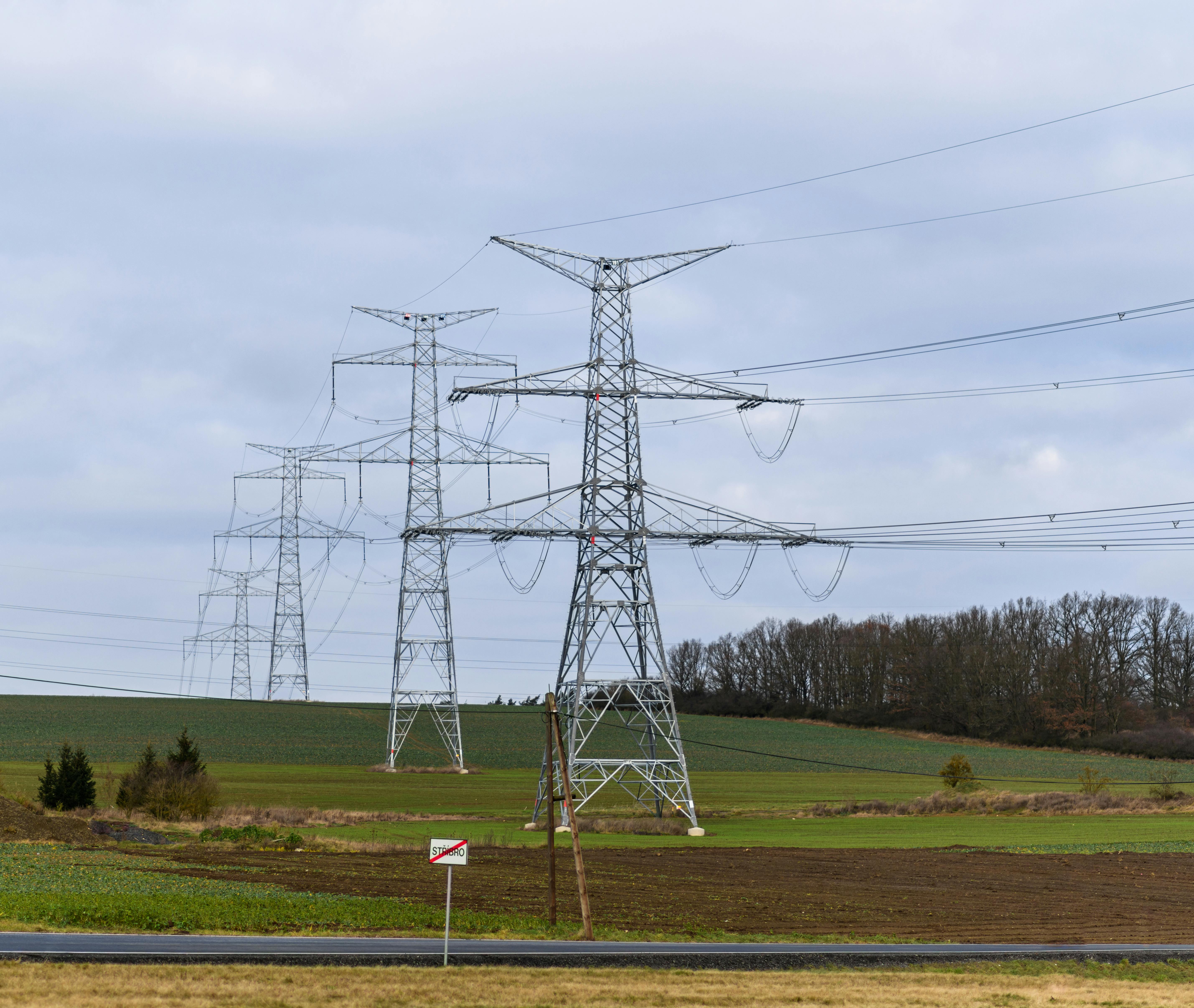
Victorian law lets electricity companies walk onto private farmland to survey routes for new transmission lines. The power comes from Section 93 of the Electricity Industry Act 2000. It has existed for 25 years. A new law passed in August 2025 added fines of about $6,000 for farmers who refuse access. The company must give you written notice first. At least 10 business days under the current code. VicGrid commits to 30 business days. A reminder must come 48 hours before each visit. You cannot permanently refuse. The power is a statutory right, not a request. But you can enforce the process. If the company skips notice steps, the entry is not valid. Compensation is available. The government offers $20,000 to let surveyors on your land. Damage claims go through the Energy and Water Ombudsman. The ombudsman is free and independent. Contractors have the same rules as the companies they work for. They must follow the same notice requirements. A new law before Parliament would let the government acquire easements before environmental checks are done. The farmers federation calls it a sneak attack.
Eighty people stood at the gate of Ben Duxson’s sixth-generation sheep and cropping farm at Marnoo, in Victoria’s Wimmera region, on April 28, 2026. VicGrid surveyors assessed the crowd, decided they did not feel safe, and drove away. Hours later, VicGrid project manager Matt Vallis texted Duxson threatening enforcement action for “hindrance, obstruction or delaying.”
(Source: ABC News, April 29, 2026)
Here is the part most farmers do not know until the letter arrives in the mail: a electricity company can walk onto your farm without your permission. It has been allowed under Victorian law for 25 years. A letter in the mail is all the warning you get. And since August 2025, if you stand in the way, you can be fined $6,000.
This story explains exactly how that works. What the law says. What notice you must receive. What you can and cannot stop. What money is available. Every rule is cited with its source.
They can walk onto your farm. Here is the law that says so.
A stranger from an electricity company can drive onto your paddock, drill holes, take soil samples, and survey the land. They do not need your agreement. They do not need to be building anything yet. They just need to be “surveying” for a possible transmission line route.
The law that makes this legal is Section 93 of the Electricity Industry Act 2000 (Vic). It has been on the books since the year 2000. Here is what it says, word for word:
“may enter upon any lands and sink bores and make surveys and do any other acts or things necessary for sinking bores or making surveys”
“Any lands” means your farm. “Make surveys” means looking around, drilling, testing. They can also “construct any works or place on under or over any such land or road any structure or equipment” and “do all other things necessary or convenient for constructing, maintaining, altering, or using any works.”
Three things matter here. Your farm is included. Survey work is specifically named, not just construction. And the law does not separate new projects from old ones. The same power covers both.
(Source: Best Hooper Lawyers, Victorian Transmission Plan analysis, 2025)
The company must cause “as little damage as may be” and pay for anything they break. That compensation runs through the Land Acquisition and Compensation Act 1986. And the company’s contractors, agents, and employees all have the same power as the company itself.
They have to warn you first. Here are the rules.
You do not get a phone call. You do not get a knock on the door that morning. But you do get a written process, and if they skip any step, their entry is not valid. That matters, because non-compliant entry is not a lawful exercise of their power, no matter who sent them.
The rules come from the Essential Services Commission’s Land Access Code of Practice, which has been enforceable since March 1, 2024. Four steps, in order:
- Rights information first. The company must send you written information about your rights and obligations before anything else happens.
- Wait 20 business days. After you get that rights information, they must wait at least 20 business days.
- Written notice of access. You must receive this at least 10 business days before they show up. The notice lasts six months max.
- 48-hour reminder. Before every single visit, not just the first one, they must remind you at least 48 hours ahead.
VicGrid has voluntarily committed to 30 business days notice for the VNI West project. That is more than the legal minimum of 10. But it is their choice, not a requirement.
(Source: EWOV, Obligations under the Land Access Code of Practice)
If a contractor rocks up without going through these steps, they are not legally on your property under Section 93. Keep the letters. Note the dates.
You cannot say no forever. Here is what happens if you try.
A farmer who receives a notice and refuses to let surveyors in will not be arrested. Not at first. But the law does not allow a permanent blockade. The power to enter is a right granted to electricity companies by Parliament. It is not a favour they are asking for.
What actually happens when you refuse goes through three stages:
Stage 1: They ask. The company contacts you and asks for voluntary access. This is the only moment where you hold real leverage. You can say yes with conditions: biosecurity rules, someone supervises the visit, you pick the date, you get paid for your trouble. Many farmers negotiate successfully at this stage.
Stage 2: They give formal notice. Under laws passed in August 2025, “authorised officers” can enter your land after giving 30 business days written notice and a 48-hour reminder. You cannot refuse this. You can challenge whether the entry is reasonable. The law says they must “take all reasonable steps to ensure that the entry onto the land is no more disruptive than is reasonably necessary.”
One hard rule protects you here: they cannot enter your home, your sheds, or any building. That is banned outright. Open paddocks are fair game. Your house is not.
Stage 3: They go to court. If you block entry after formal notice, the company can apply to the Magistrates’ Court for an order forcing access. The court checks whether the company followed the rules. If they did, you get an order. If you breach that order, the fine is about $6,105 for an individual. The original Bill proposed double that. Crossbench MPs cut it in half during passage.
(Source: Best Hooper Lawyers, VicGrid Stage 2 Reform Bill analysis, September 2, 2025)
There is money on the table. Here is how much.
The Victorian government offers payments to farmers who allow survey access. These are not compensation for damage. They are separate. The government doubled most of them under the August 2025 laws.
- $20,000 for saying yes to environmental and heritage surveys
- $2,000 a day for extra survey days beyond the first round, capped at $50,000 per property
- $50,000 if an easement is offered to you. You keep this even if the project gets cancelled
- $20,000 to $40,000 for neighbours whose properties are close to but not on the route
- $8,000 per kilometre per year for 25 years if transmission lines end up on your land
- $46,000 per hectare for the actual easement area under VNI West
(Source: RenewEconomy, September 2, 2025)
If they damage your property during a visit, that is a separate claim. Section 93 says they must “make full compensation” for damage. The Land Acquisition and Compensation Act 1986 sets out how that works. Crop damage, fence damage, soil compaction, all of it.
If you have a dispute about how they treated you or your property, the Energy and Water Ombudsman Victoria handles it. Free. Independent. They can award money for “unreasonable inconvenience, frustration, stress.” Not just physical damage.
Everything changed in August 2025. Here is what they added.
Before August 2025, the law let companies onto your land but had no real enforcement. If you said no, the company had to go to the Supreme Court. Expensive. Slow. Most companies just kept asking.
On August 28, 2025, the Victorian Parliament passed the VicGrid Stage 2 Reform Bill. Late session. Crossbench votes from Legalise Cannabis and the Animal Justice Party got it over the line. It became law on September 16, 2025.
Three things changed:
- A government agency called VicGrid took over transmission planning from the Australian Energy Market Operator. VicGrid is run by the government, not a private company.
- “Authorised officers” were created - people with power to enter land, issue warnings, and go to court for access orders.
- Refusing became a finable offence. About $6,105 for an individual. About $48,000 for a company that blocks access.
Opposition leader Brad Battin stood on the steps of Parliament on July 30, 2025 and told a crowd of farmers that a Coalition government would repeal these laws. The state election is expected in November 2026.
(Source: Guardian Australia, July 31, 2025)
Then in March 2026, they tried to go further.
In March 2026, the Victorian Farmers Federation found a last-minute amendment buried in an unrelated bill. It would let the government compulsory acquire transmission easements on your land before the environmental assessment process finishes.
In plain English: they could start taking your land before the environmental checks say the route is even safe or appropriate.
VFF President Brett Hosking called it “a sneak attack being jammed through at the eleventh hour.”
Gannawarra Shire Council voted to oppose it on March 23, 2026. Law firm Maddocks published analysis on April 8 confirming it would create a faster acquisition process with fewer steps for landowners to challenge.
(Source: Maddocks, April 8, 2026)
A letter arrives. Here is what to do.
-
Check it against the four steps. Did they send rights information first? Did they wait 20 business days? Is the access notice at least 10 business days before the date? Did they send a 48-hour reminder? Missing any step means the entry is non-compliant.
-
Photograph everything. Your property before they arrive. Your property after they leave. Every letter. Every text. The names of everyone who comes onto your land.
-
Call EWOV if something goes wrong. The Energy and Water Ombudsman is free and independent. They have binding power over transmission companies. Phone: 1800 500 727. Website: ewov.com.au.
-
Call the VFF. The Victorian Farmers Federation published a “Know Your Rights” guide on October 30, 2025 for landholders receiving these notices. Phone: 1300 882 833.
(Source: VFF, October 30, 2025)
- Get a lawyer. This story is general information. Your situation may be different.
Two projects. Billions of dollars. Your land.
Two projects are sending these letters to Victorian farmers right now.
VNI West is a 475-kilometre transmission line from Victoria to NSW. The cost has doubled from $3.9 billion to $7.6 billion. About 170 landholders sit in the corridor. Roughly 40 per cent have let surveyors in. The rest have not.
(Source: ABC News, July 31, 2025)
Western Renewables Link runs 190 kilometres from Bulgana to Sydenham. Cost: $1.53 billion. Run by AusNet Services. Communities along the route accused the company of “misrepresentation, deception and lack of empathy” when it first approached them.
(Source: RenewEconomy, September 2, 2025)
Ben Duxson at Marnoo is in the path of VNI West. The line would pass within 150 metres of his shearing shed. He has refused access twice. The first time, in December 2025, more than 100 farmers gathered at his gate. The second time, on April 28, 2026, 80 people showed up. VicGrid drove away both times.
Then came the text message.
The November 2026 state election will decide whether these laws stay or go. Until then, the letters keep coming.
Sources
- Section 93, Electricity Industry Act 2000 (Vic) - via Best Hooper Lawyers analysis
- ESC Land Access Code of Practice (2024) - Essential Services Commission
- EWOV, Obligations under the LACOP - Energy and Water Ombudsman Victoria
- EWOV, Land Access Complaints - Energy and Water Ombudsman Victoria
- Best Hooper, VicGrid Stage 2 Reform Bill (2025) - Legal analysis
- RenewEconomy, “Fury over fines eclipses promise of payments” (Sep 2, 2025)
- ABC News, “VicGrid surveyors cancel access visit” (Apr 29, 2026)
- Guardian Australia, “Unlikely group of protesters” (Jul 31, 2025)
- VFF, “Farmers shocked by transmission land-grab bid” (Mar 5, 2026)
- VFF, “Know your rights: VNI West” (Oct 30, 2025)
- Maddocks, “New power for Victorian government” (Apr 8, 2026)
- ABC News, “VNI West costs double” (Jul 31, 2025)
- Land Acquisition and Compensation Act 1986 (Vic)
- AusNet, Western Renewables Link FAQ
Related Investigations

ANZAC Day: Welcome to Country Booed in Four Cities
Welcome to Country ceremonies were booed at dawn services in Melbourne, Sydney, Perth and Adelaide on ANZAC Day 2026. It is the second consecutive year disruptions have occurred, spreading from three cities to four.

Australians Pay Six Times More Tax on Beer Than the Government Collects from Oil and Gas Profits
In 2023-24, alcohol excise raised $8.0 billion. The Petroleum Resource Rent Tax raised $1.43 billion. The tax designed to capture resource profits for Australians collects less than the tax on a night out. The gap is not hidden.

Three Authorities, Three Stories, Your Mortgage
The Treasurer told Parliament government spending played no role in rate rises. The RBA Governor said the opposite. Your mortgage is caught in the middle.