
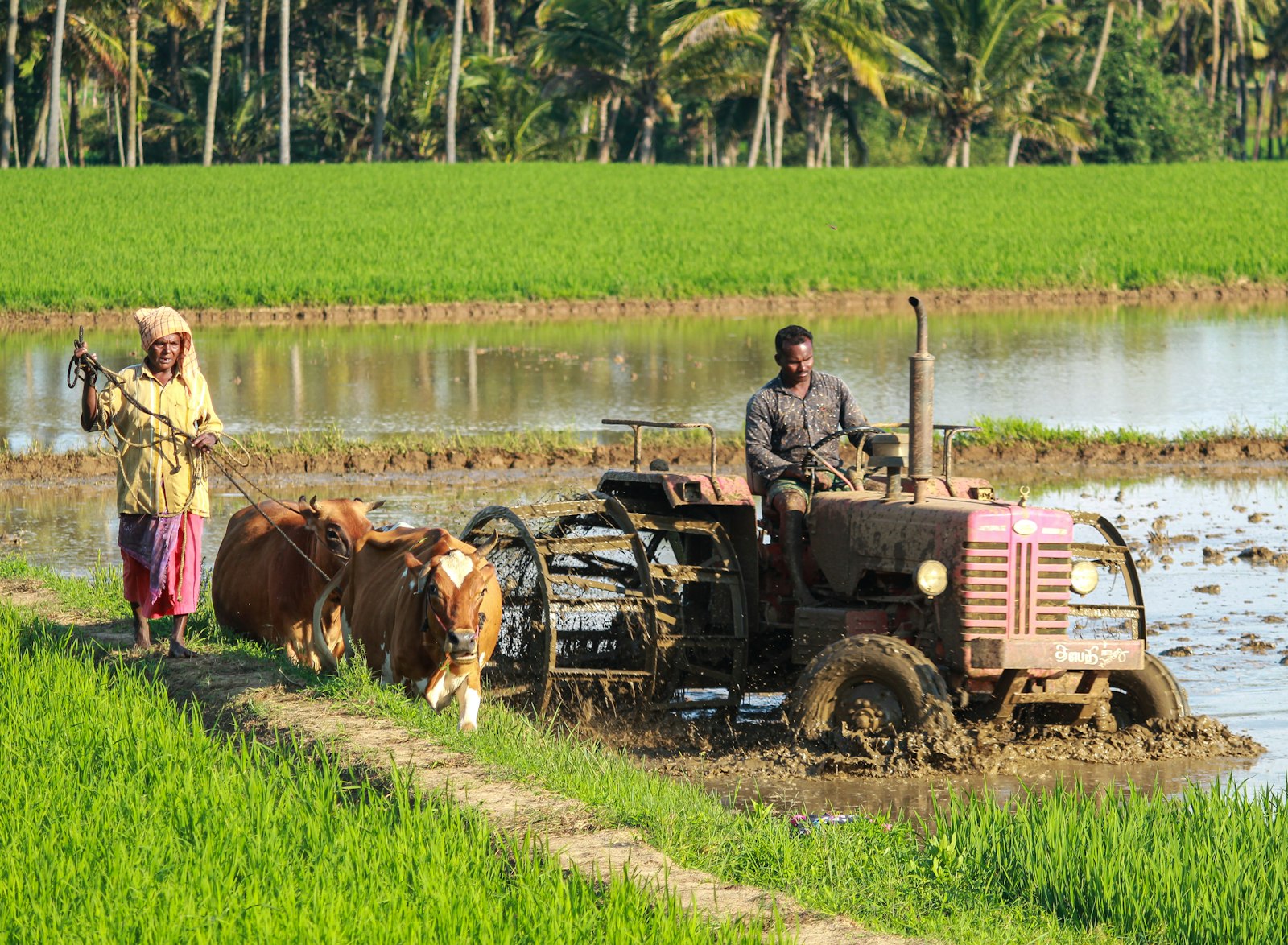
One strait carries a third of the world's traded fertiliser. That strait is blocked. Urea prices have doubled in three months. Australia imports nearly all of its urea. Most of it came through Hormuz. Farmers are deciding right now what to plant. Less fertiliser means smaller harvests. Smaller harvests mean higher food prices. The World Food Programme says 45 million more people could face hunger. That is a projection, not a certainty. It depends on how long the strait stays closed. The planting window is open. The decisions being made now will shape food supplies for years.
The winter crop window opens in May. Wheat, barley, canola. Australian farmers are staring at their spreadsheets, running the numbers on urea.
Sixty-nine per cent of Australia’s urea came through the Strait of Hormuz. Ninety-six per cent of what Australians use is imported. The strait has been a naval chokepoint for eight weeks. Urea that cost $800 a tonne in January now costs $1,600. (Source: CPAML, March 2026)
They are deciding right now what to plant, and how much to invest in a season where the single most important input has doubled in price. Some will plant less. Some will apply less fertiliser to what they do plant. Either way, yields fall.
This is not a story about oil. The oil crisis has been covered. This is about what comes next: fertiliser. And what comes after fertiliser: planting decisions, harvest yields, food prices, and eventually famine. The war started February 28. The famine it may cause is years away. But the chain of events starts now, in April, in every farming district in Australia, India, Bangladesh, and Kenya.
One strait, one-third of the world’s fertiliser
About 30 per cent of all internationally traded fertiliser normally transits the Strait of Hormuz. Not produced there. Shipped through it. (Source: UNCTAD, March 2026; FAO, March 2026)
The Persian Gulf states export 16 million tonnes of fertiliser by sea each year. Qatar, Saudi Arabia, Oman, the UAE, Bahrain. Sixty-seven per cent of that is urea, the most widely used nitrogen fertiliser on earth. Twenty per cent is DAP, a phosphorus blend. (Source: UNCTAD, March 2026)
Qatar alone produces 14 per cent of the world’s urea. QAFCO, the Qatar Fertiliser Company, runs the largest single-site urea export facility on the planet. There is no other way to get QAFCO’s product out of the Gulf. No pipeline. No overland route. Just the strait, which is mined, blockaded, or under threat of attack. (Source: The Guardian, April 2026)
Nearly half of all urea traded globally comes from the Middle East. (Source: IFA, March 2026) When Hormuz closes, that supply does not reroute. It stops.
The gas problem
Nitrogen fertiliser is made from natural gas. Not a bit of gas. Sixty to eighty per cent of the production cost of nitrogen fertiliser is the gas itself. (Source: OECD, 2024) That is not a contested figure. It is the baseline of the entire industry.
European TTF gas prices nearly doubled in the first two weeks of the war. Pre-conflict: EUR 30-32 per megawatt hour. Peak in early March: EUR 63. Late April: settling around EUR 44-45. (Source: Trading Economics; Modo Energy, March 2026)
Russia, the world’s largest fertiliser exporter, has seen a 20 per cent drop in its own production and has restricted exports to preserve domestic supply. (Source: The Conversation, April 2026)
So the market is being squeezed from both ends. Physical supply through Hormuz is blocked. And the gas that makes nitrogen fertiliser is more expensive everywhere.
What it costs
Urea was trading at roughly $480 a tonne FOB Middle East before the war. By late April, it had cleared $700. Futures are above $850. That is a 70 per cent increase in under three months. (Source: Trading Economics; Investing.com AU, April 2026)
In Australia, urea has doubled to about $1,600 a tonne. (Source: CPAML, March 2026)
DAP, the main phosphorus fertiliser, is at $894 a tonne and climbing. (Source: Agrolatam, April 2026) Ammonia, the building block of all nitrogen fertilisers, has moved significantly across every benchmark. (Source: Noria Research, March 2026)
Fitch Ratings raised its fertiliser price assumptions on March 13. DTN reported in late April that all eight major fertilisers it tracks were higher than a month earlier. Six were “significantly higher.” (Source: Fitch Ratings; DTN, April 2026)
These are not projections. These are prices being paid now by farmers who need product now.
The clock
India’s Kharif season starts in May. Rice, maize, cotton. The main planting window. Sixty days. Fertiliser needs to be in country, distributed, and ready before the monsoon arrives.
India imports 36 per cent of its urea from the Middle East: 3.4 million tonnes from Oman, Qatar, Saudi Arabia, and the UAE. (Source: European Commission, April 2026) India has an $18.6 billion fertiliser subsidy. It may not be enough. Food inflation is already climbing ahead of the planting window. (Source: Lokmat Times, April 2026)
Bangladesh is worse. Fifty-three per cent of its fertiliser comes from the Gulf. Boro rice, the largest and most productive rice season, produces 55 per cent of the country’s annual rice crop. That crop is directly threatened. Bangladesh is one of the most fertiliser-dependent agricultural economies in South Asia. (Source: Asia News Network, March 2026; Lokmat Times, April 2026)
Kenya imported 834,000 metric tonnes of fertiliser in 2024. Twenty-six per cent came from the Persian Gulf. FEWS NET, the famine early warning system, has published analysis on Kenya’s exposure to fertiliser supply shocks. Kenya is among the ten countries most affected. (Source: Kenya Times, March 2026; FEWS NET, March 2026)
Egypt has lost its gas imports from Israel and now faces higher input costs for its own fertiliser production, on top of pressure on grain import routes. (Source: Carnegie Endowment, March 2026; Middle East Institute, March 2026)
Al Jazeera reported in early April that “as sowing season approaches across the region, farmers face scarcity and rising cost of fertiliser.” India and Bangladesh, specifically. (Source: Al Jazeera, April 2026)
Farmers are making planting decisions right now. Less fertiliser means less yield. Less yield means less food. The arithmetic does not care about geopolitics.
The war started eight weeks ago. The fertiliser stopped moving eight weeks ago. The planting decisions are being made now. The harvests will be smaller.
45 million
The World Food Programme warned on March 17 that 45 million additional people could be pushed into acute hunger by mid-2026 if the conflict persists. (Source: WFP, March 2026)
That is on top of the 318 million already projected to face crisis-level hunger this year before the war started. The combined figure, 363 million, would be the worst hunger crisis on record. (Source: WFP Global Outlook, 2026)
FAO Chief Economist Maximo Torero warned on March 26 that “disruptions to a critical global trade corridor are triggering interconnected shocks across energy, fertiliser, and agrifood systems.” FAO projected global fertiliser prices could average 15 to 20 per cent higher in the first half of 2026 if the crisis persists. (Source: FAO, March 2026)
By mid-April, Torero was telling anyone who would listen that “the clock is ticking” on fertiliser deliveries. Farmers who cannot access fertiliser in time for planting will see reduced yields. Not a warning about next year. A warning about this year’s planting, next year’s harvest, and the food prices that follow. (Source: African Agribusiness, citing FAO, April 2026)
Ertharin Cousin, former head of the WFP, put it plainly in Foreign Policy: “The next global food crisis has already begun.” (Source: Foreign Policy, April 2026)
Australia’s blind spot
Sixty to sixty-nine per cent of Australia’s urea imports come through the Strait of Hormuz. The country is 96 per cent import-reliant for urea overall. About 3.8 million tonnes a year. Major suppliers: Qatar, Saudi Arabia, the UAE, Oman, Bahrain. (Source: ABC News, April 2026; AFR, April 2026)
Australian urea prices have doubled. The government says it is “moving to shore up supplies.” Australia has turned to Brunei and Indonesia for additional supply. (Source: ABC News, April 2026; Discovery Alert, April 2026)
But the arithmetic is brutal. If 69 per cent of supply is disrupted and the alternative sources are already running at capacity for their own domestic markets, the gap cannot be filled by switching suppliers. There is no Strategic Fertiliser Reserve. No domestic urea production to speak of.
Tony Seabrook is 76. Fifth generation. Farms 3,700 acres in Western Australia. He told the ABC in March that the fuel crisis alone had left him with less than a third of the diesel he needed for the season. Fertiliser is a second hit on top of that. “We get one go a year,” he said. “When it’s time to go, it’s time to go.” (Source: ABC News, March 2026)
Winter crops need to be sown. But Australian farmers are worried about both fertiliser and fuel. (Source: UWA/The Conversation, April 2026) The diesel crisis was covered here. The fertiliser crisis is its twin.
The winter crop goes in the ground in May and June. The decision about how much to plant, and how much fertiliser to apply, is being made now.
Last time
In 2022, Russia invaded Ukraine. Fertiliser prices spiked. Russia and Belarus restricted exports. Food prices followed.
Farmdocdaily at the University of Illinois published a direct comparison of the 2022 shock and the 2026 Hormuz closure. The mechanism is the same: supply disruption, price spike, planting decisions compromised, harvests reduced, food prices up. (Source: farmdocdaily, March 2026)
IFPRI noted one key difference. In 2022, the shock “produced near-record farm income of $160 billion as commodity price gains exceeded input cost increases.” That will not happen this time. The 2026 shock is a physical transit blockage affecting different suppliers. The Gulf states are not at war. Their plants are running. But their product cannot leave. (Source: IFPRI, April 2026)
Food prices could rise 12 to 18 per cent by the end of 2026. (Source: AgFunderNews/Helios AI, March 2026) In 2022, export restrictions on wheat, beef, and palm oil compounded the crisis. Countries hoarded. The same pattern could repeat.
The other side
Not everything is catastrophic. Not yet. And it may not get there.
Potash does not transit Hormuz. Canada, Russia, and Belarus supply global potash through entirely different routes. This crisis is a nitrogen and sulphur crisis. Potash is fine. (Source: NDSU Trade Monitor)
Prices have not yet hit 2022 peaks. The Guardian reported that “costs of different types of fertiliser have not yet hit the levels seen in 2022.” If Hormuz reopens, prices retreat. If it stays closed through the third quarter, 2022 peaks are exceeded. Right now the crisis is trajectory, not level. (Source: The Guardian, April 2026)
The United States is relatively insulated. Domestic gas is cheap. CF Industries and Nutrien produce from domestic supply. Only 17 per cent of US urea comes from the Gulf. (Source: farmdocdaily, March 2026)
China has urea and DAP export restrictions. If lifted, significant supply enters the market. But China also faces domestic food security concerns. Those restrictions exist for a reason.
Demand destruction is real. At $700+ urea, farmers use less. That stabilises prices. But “demand destruction” is a clinical way of saying “farmers plant less or apply less fertiliser, producing lower yields, meaning less food.” The price finds a floor. The food supply damage is already done. Demand destruction also means the worst-case price scenarios may not materialise. When enough buyers pull back, the market finds a ceiling.
The strait is not fully sealed. A ceasefire agreement exists, and some shipping has resumed through Hormuz. Full pre-war traffic volumes have not returned, but the chokepoint is partial, not total. If the ceasefire holds, the supply picture improves quarter by quarter.
Alternative suppliers are being activated. Australia has already secured commitments from Brunei and Indonesia. India is pursuing deals with Nigeria and Morocco. These sources cannot fully replace Gulf volumes, but they take the edge off the shortfall. The supply gap narrows with each new agreement.
The WFP’s 45 million figure is a projection, not a certainty. The WFP itself framed it with a critical caveat: “if the conflict persists.” That projection assumes continued Hormuz disruption through the third quarter and no meaningful substitution from alternative suppliers. If the strait reopens or alternatives scale up, the number comes down. The 45 million figure represents a plausible worst case, not a guaranteed outcome.
This is a serious situation. It is not yet a guaranteed catastrophe. The difference between the two depends on diplomacy, substitute supply chains, and how long the strait stays disrupted.
The chain
Here is the full cascade, start to finish. A third of the world’s traded fertiliser moves through one strait. That strait is blocked. Sixty to eighty per cent of nitrogen fertiliser cost is natural gas, which just got more expensive. Urea has gone from $480 to $700+ a tonne. Futures say $850.
India’s Kharif season starts in May. Bangladesh’s boro rice needs top-dressing now. Kenya’s maize planting is underway. Australia’s winter crop window opens in weeks.
Farmers who cannot get fertiliser plant less, or plant without it. Either way, yields fall. Lower yields mean less food on global markets. Less food means higher prices. Higher prices mean the 318 million people already facing crisis-level hunger become 363 million. That is the WFP’s number, not a guess.
The war started eight weeks ago. The fertiliser stopped moving eight weeks ago. The planting decisions are being made now. The harvests will be smaller. The food prices will be higher. And the famine, if it comes, will arrive in 2027 and 2028, long after the cameras have moved on to something else.
Australia has no Strategic Fertiliser Reserve. No domestic urea production. No alternative route for 69 per cent of its supply. The government is shoring up supplies from Brunei and Indonesia. Farmers are running the numbers. And the winter crop goes in the ground in May.
The way forward
The current crisis exposes structural weaknesses that existed long before February 28. Some of the fixes are immediate. Others take years. All of them are straightforward.
Australia should build a strategic fertiliser reserve. The country maintains a strategic fuel reserve. It holds emergency grain stocks. Fertiliser is just as critical. A reserve of 90 days’ supply, held domestically, would give farmers a buffer during any future disruption. The cost would be significant but finite. The cost of not having one is being felt right now.
Develop domestic urea production. Australia has abundant natural gas. Urea is made from natural gas. The math writes itself. A domestic urea plant would not eliminate imports, but it would reduce exposure to single-chokepoint risk. This has been proposed before and shelved because imported urea was cheaper. Imported urea is not cheaper anymore. The economic case has changed.
Diversify supply away from Hormuz-dependent sources. The deals with Brunei and Indonesia are a start. They need to be permanent, not emergency measures. Long-term supply contracts with producers in Southeast Asia, Africa, and the Americas would spread the risk. No single strait should be able to paralyse Australian agriculture.
Support farmers through the current season with targeted subsidies. Not broad-based welfare. Targeted assistance tied to fertiliser purchases for the 2026 winter and summer crops. The goal is to prevent yield collapse this year. A bad harvest cannot be fixed retroactively. The window is weeks, not months.
Internationally, ensure WFP fertiliser shipments are exempt from trade restrictions. Several countries have already imposed or are considering fertiliser export controls. Humanitarian food production should not be caught in those nets. The WFP needs guaranteed access to fertiliser for the countries it serves. That means formal exemptions, not ad hoc waivers.
Sources
Strait of Hormuz fertiliser transit
- UNCTAD (March 10, 2026) - “Hormuz shipping disruptions raise risks for energy, fertilizers and vulnerable economies”
- UNCTAD (March 30, 2026) - “From gas to grain: Fertilizer disruptions raise risks for food security and trade”
- FAO (March 15, 2026) - “Global Agrifood Implications of the 2026 Conflict in the Middle East”
- IFPRI (April 1, 2026) - “The Iran War’s Impacts on Global Fertilizer Markets and Food Production”
- Carnegie Endowment (March 12, 2026) - Fertilizer, Iran, Hormuz, and the food crisis
- IMF (March 30, 2026) - “How the war in the Middle East is affecting energy trade and finance”
Natural gas and nitrogen fertiliser costs
- OECD (June 2024) - “Understanding the resilience of fertiliser markets to shocks”
- Reuters (March 17, 2026) - “How does iran war affect fertiliser supplies, prices, food security”
- The Conversation (April 6, 2026) - “Hormuz closure threatens the global food supply. Why grocery price hikes are coming”
Fertiliser prices
- Trading Economics - Urea commodity futures
- DTN (April 2026) - Fertilizer price survey, all eight major fertilisers higher
- Fitch Ratings (March 13, 2026) - Fertilizer price assumptions raised
- CNBC (March 25, 2026) - “Food insecurity warnings as Iran conflict disrupts fertilizer”
Food security and hunger estimates
- WFP (March 17, 2026) - “WFP projects food insecurity could reach record levels”
- WFP (March 31, 2026) - “Global disruptions to supply chains are driving tomorrow’s hunger crisis”
- FAO Chief Economist Maximo Torero (March 26, 2026) - Warning on global food security risks
- Foreign Policy (April 2, 2026) - “The Next Global Food Crisis Has Already Begun” by Ertharin Cousin
Planting seasons and crop timing
- Al Jazeera (April 2, 2026) - “It all depends on the crop: Gulf crisis hits South Asia farmers”
- Asia News Network (March 30, 2026) - Bangladesh fertiliser dependency analysis
- FEWS NET (March 2026) - Exposure to fertilizer supply and price shocks
Australian fertiliser dependency
- ABC News (April 15, 2026) - “Iran war’s exposure of Australia’s fertiliser deficit”
- ABC News (April 16, 2026) - “Why Australia turned to Brunei to shore up supplies of critical crop fertiliser”
- ABC News (March 10, 2026) - “Middle East conflict hiking fertiliser costs for Australian farmers”
- ABC News (April 24, 2026) - “Four charts that paint a worrying picture for global fertiliser prices”
- The Guardian Australia (April 23, 2026) - “Fertiliser is in short supply. What does it mean for Australia’s farmers?”
- UWA/The Conversation (April 2, 2026) - “Winter crops need to be sown, but farmers are worried about fertilisers and fuel”
- Discovery Alert (April 16, 2026) - “Strategic energy dependencies 2026: Hormuz global disruptions”
Historical comparison
- farmdocdaily, University of Illinois (March 23, 2026) - Comparison of 2022 Russia-Ukraine War shock and 2026 Hormuz Strait closure
- IFPRI (April 21, 2026) - “Will the Iran crisis lead to another round of food price spikes?”
Contrarian analysis
- The Guardian (April 5, 2026) - “‘Food security timebomb’: a visual guide to the Gulf fertiliser blockade”
- Financial Times (April 17, 2026) - “The coming global food crisis”
This story is part of The Untold Truth’s coverage of the Strait of Hormuz crisis. The fuel security dimensions are examined in Sold Down the River. The Untold Truth has not contacted the Australian Department of Agriculture, QAFCO, or the Gulf state fertiliser companies for comment prior to publication.
The Untold Truth. Independent. No sponsors. No bullshit.
Related Investigations
Supply Chain Vulnerability / Cost of Living Transmission
Diesel at $3.19: How Australia Ran Low on Fuel
Diesel hit 319 cents per litre after the Strait of Hormuz was blockaded. One in twelve trucking businesses closed. Remote communities faced eight hours of drinking water. Australia imports 90% of its fuel and holds roughly 30 days of diesel reserves.

Antibiotic Resistance: 1.9 Million Deaths a Year by 2050
Drug-resistant infections kill more than HIV and malaria combined. By 2050, 1.9 million could die each year. In remote Australia, MRSA rates exceed 50 per cent.

Everyone's talking about undersea cable sabotage. Half of what you've heard is wrong.
The viral 'watch the cables' narrative is mostly true - Russian and Chinese vessels really are damaging undersea infrastructure. But four major claims making the rounds are flat-out wrong, including how many cables connect Australia to the world.